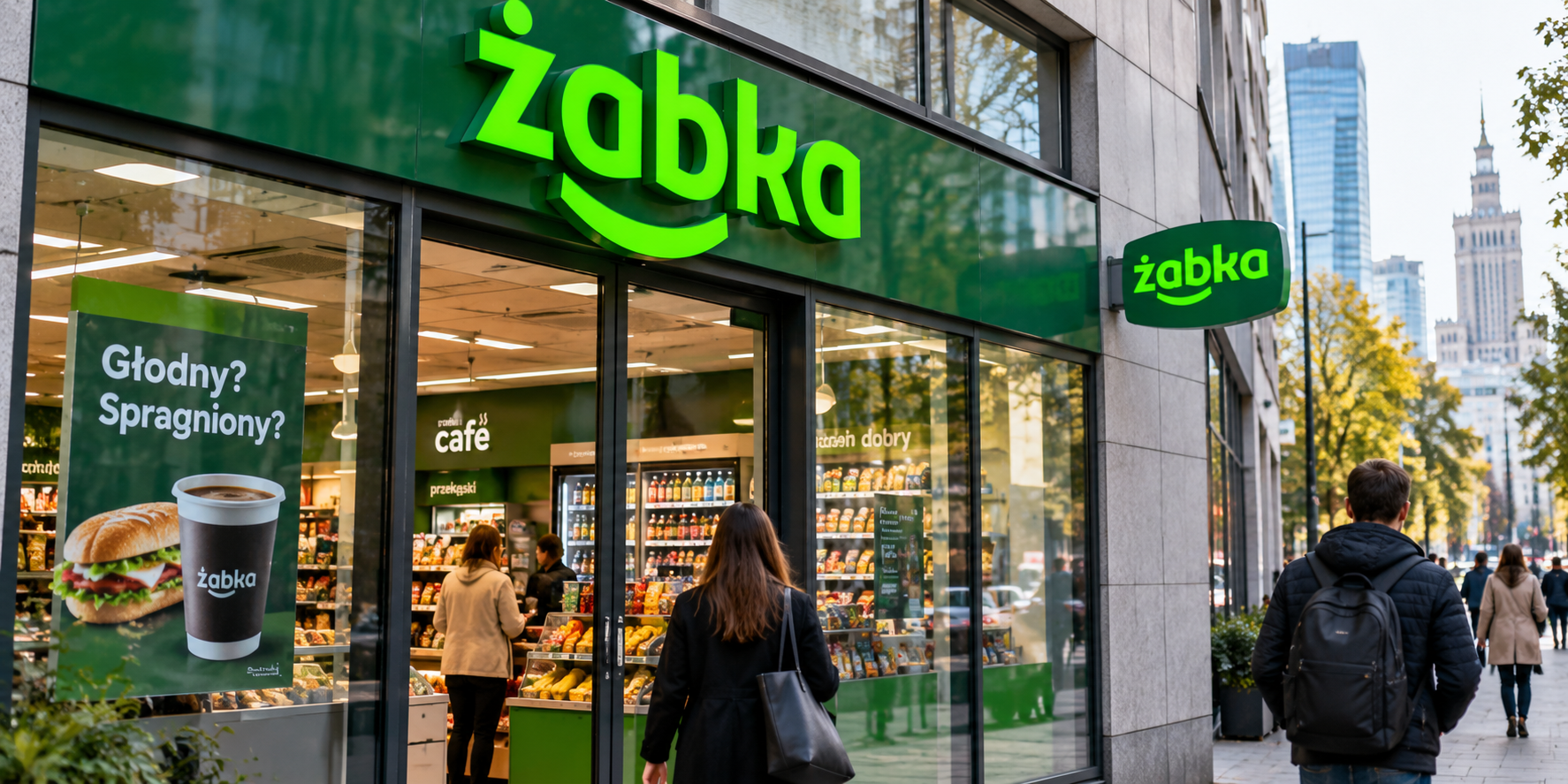
The Canadian owner of Circle K has moved another step closer to taking control of Żabka Group after the European Commission raised no objection to the proposed acquisition under the EU’s Foreign Subsidies Regulation.
The formal takeover-condition announcement published through Ipopema Securities confirms that the Commission issued its FSR decision on 9 October 2026.
That satisfies one of the regulatory conditions attached to Alimentation Couche-Tard’s offer for Żabka.
A separate Romanian foreign-investment condition was fulfilled on 29 September, meaning the transaction is now dependent on only one of the specified regulatory approvals: competition clearance from the relevant antitrust authority.
The takeover has therefore not completed.
Offer values the shares at about PLN 32.1bn
Couche-Tard is offering PLN 32 per Żabka share through its wholly owned subsidiary Circle K Polska.
The current tender covers 1,002,974,605 shares, representing 100% of Żabka’s share capital.
At PLN 32 a share, that implies a value of approximately PLN 32.1 billion, equivalent to roughly $8.23 billion or €7.33 billion using the latest available National Bank of Poland average exchange rates.
When the transaction was first announced in July, Couche-Tard described the broader transaction as its largest acquisition to date, saying it would establish a controlling position in one of Europe’s largest convenience and digital-retail platforms.
Couche-Tard is based in Canada and operates the Circle K convenience-store and fuel-station network internationally.
Żabka, headquartered in Poznań, operates Poland’s largest convenience-store network and has also expanded into Romania and digital retail services.
Foreign-subsidies clearance is not competition clearance
The Commission’s 9 October decision needs to be understood in the context of two separate EU regulatory systems.
The Foreign Subsidies Regulation, or FSR, allows the European Commission to examine whether financial contributions from non-EU governments could distort competition inside the EU when companies participate in major acquisitions or public procurement.
For large mergers and acquisitions, the Commission can require notification where the target or one of the parties has substantial EU turnover and the companies involved have received sufficient financial contributions from non-EU countries.
The European Commission explains that the FSR review of concentrations is designed to address potential distortions created by foreign subsidies rather than the ordinary competitive effects of a merger.
The Żabka transaction appeared in the Commission’s foreign-subsidies register as FS.100397 — CIRCLE K / ZABKA GROUP, with the decision recorded on 9 October.
The Commission’s no-objection decision means that condition has been satisfied.
It does not mean Brussels has already given the transaction its ordinary merger-control approval.
One regulatory condition remains
The takeover announcement says that, following the FSR decision and the earlier Romanian foreign-investment approval, the offer remains conditional only on the requirement in point 24(a) of the tender document.
That condition concerns approval of the concentration by the competent competition authority.
When Couche-Tard originally announced the acquisition, it said competition clearance would need to come from either the European Commission or Poland’s Office of Competition and Consumer Protection, UOKiK, as applicable.
As of 11 October, no announcement has been identified confirming that this final condition has been satisfied.
That means the deal remains conditional even though two of its three specified regulatory hurdles have now been cleared.
Why Romania also had to approve the deal
The transaction also required review under Romania’s foreign-direct-investment regime.
Żabka has expanded beyond Poland into Romania, where it operates the Froo convenience format.
The Romanian Commission for the Examination of Foreign Direct Investments approved the transaction on 29 September, according to the subsequent tender announcement.
Foreign-investment screening is separate again from both the FSR process and competition review.
In practice, a large cross-border acquisition can therefore face several overlapping regulatory examinations assessing different questions:
- whether foreign subsidies could distort the EU market;
- whether the acquisition could harm competition; and
- whether the investment raises issues under national foreign-investment rules.
For investors following the Żabka deal, only the competition condition remains outstanding among those specified in the tender documentation.
More than 57% of shares are already committed
Couche-Tard entered the process with substantial shareholder support.
CVC Capital Partners, Partners Group and senior Żabka executives entered into irrevocable undertakings to tender their holdings.
Together those commitments cover 574,153,132 shares, equivalent to approximately 57.245% of Żabka’s share capital and voting rights.
That means Couche-Tard already has contractual commitments covering a majority of the company, subject to the terms of the offer.
The ultimate stake it acquires will depend on how many additional shareholders tender their shares before the acceptance period closes.
Shareholders currently have until 26 October
The tender offer opened on 27 August 2026.
It had originally been scheduled to close on 25 September, but Couche-Tard extended the acceptance period by more than a month.
The current tender timetable provides for:
- 26 October — end of the acceptance period;
- 29 October — expected purchase transaction date;
- 3 November — expected settlement through Poland’s securities depository, KDPW.
Those dates remain subject to the takeover conditions being satisfied or otherwise dealt with in accordance with the offer terms.
The fact that an expected purchase and settlement date has been published should therefore not be read as confirmation that the acquisition is guaranteed to close on those dates.
What could happen to Żabka’s stock-market listing
Couche-Tard’s stated aim goes beyond acquiring a simple controlling majority.
The Canadian group has said it ultimately intends to acquire up to 100% of Żabka’s shares and voting rights.
If it reaches at least 95% of the total voting rights, Couche-Tard has said it intends to begin a compulsory acquisition — commonly known as a squeeze-out — of the remaining shares.
It would also seek to remove Żabka from trading on the Warsaw Stock Exchange.
Neither of those steps has happened.
Whether a squeeze-out becomes available will depend on the final level of shareholder acceptances and the stake Couche-Tard ultimately acquires.
What the acquisition would mean for Couche-Tard
Żabka would significantly expand Couche-Tard’s presence in Central and Eastern Europe.
Couche-Tard already operates nearly 400 Circle K sites in Poland.
Żabka brings a very different retail model: a dense network of small neighbourhood convenience stores largely operated through franchisees, supported by digital services, logistics infrastructure and food-to-go operations.
When announcing the deal, Couche-Tard said Żabka operated more than 13,000 stores across Poland and Romania and handled approximately 4.3 million customer transactions a day.
The Canadian company has also said it intends to preserve Żabka’s brand, management structure and franchise model.
The acquisition would therefore combine two major convenience-retail businesses operating in Poland but with substantially different store formats.
That overlap also helps explain why the remaining competition review is important.
The FSR decision removes one uncertainty, not all of them
For investors, franchisees and suppliers, the 9 October decision removes another regulatory obstacle from a transaction that would transfer control of one of Poland’s best-known retail groups to a major international operator.
But the precise legal status remains important.
The Commission has cleared the transaction under the Foreign Subsidies Regulation.
Romania has supplied the required foreign-investment approval.
The final specified regulatory condition — competition approval — remains outstanding as of 11 October.
Until that condition is satisfied and the tender process reaches settlement, Żabka remains a separately listed company and the takeover remains incomplete.