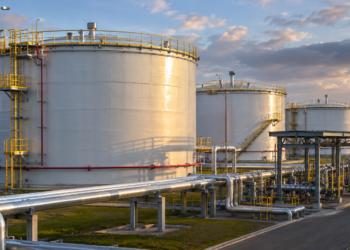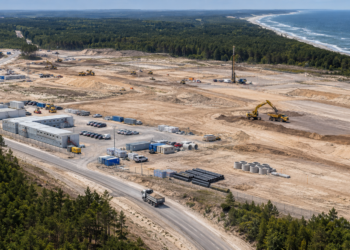
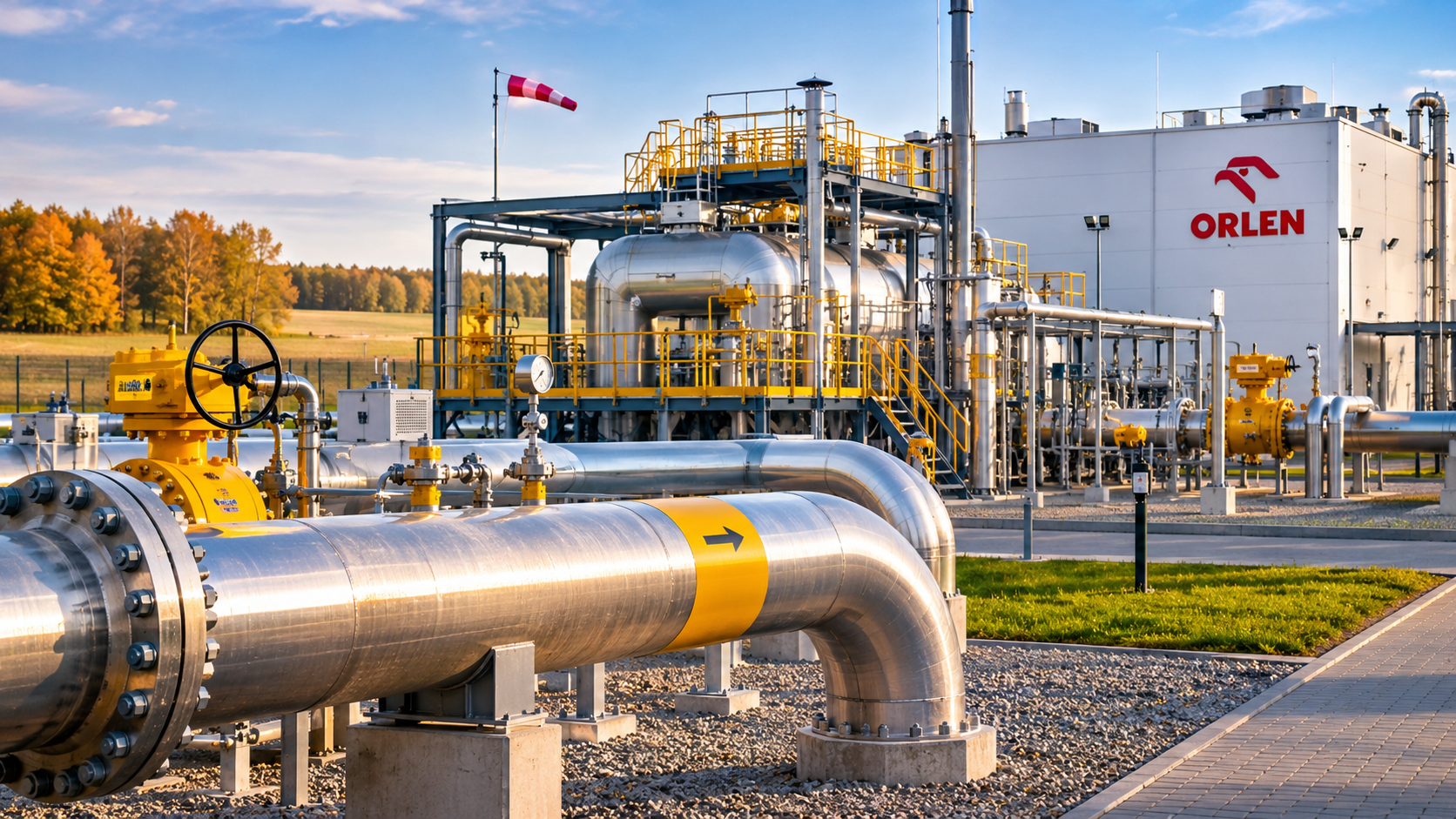
Polish energy group Orlen has completed construction of a PLN 580 million (approximately $148 million or €132 million) expansion of the Wierzchowice underground gas-storage facility, paving the way for a 25% increase in Poland’s national gas-storage capacity.
The investment, announced by Orlen on 4 November 2026, increases the designed working capacity of Poland’s largest underground gas-storage facility from 1.3 billion to 2.1 billion cubic metres.
The additional 800 million cubic metres would raise Poland’s total underground storage capacity to approximately 4.1 billion cubic metres once the expanded infrastructure is fully commissioned and authorised for operation.
Although construction has been completed, the Energy Ministry confirmed that commissioning, technical acceptance and an amendment to the facility’s regulatory licence are still required before its full expanded capacity can be used.
The project represents one of Poland’s most significant recent investments in gas infrastructure, strengthening the country’s ability to manage seasonal demand, fluctuations in energy markets and potential supply disruptions.
Poland’s largest gas-storage facility expands by more than 60%
Located in Wierzchowice in Lower Silesia, western Poland, the facility is already the country’s largest underground natural-gas storage installation.
Its designed working capacity has increased by approximately 62%, from 1.3 billion to 2.1 billion cubic metres.
The project is expected to make Wierzchowice responsible for approximately half of Poland’s total underground gas-storage capacity once the expansion becomes fully operational.
| Storage capacity | Before expansion | After expansion |
|---|---|---|
| Wierzchowice facility | 1.3bn m³ | 2.1bn m³ |
| Poland’s national total | Approximately 3.36bn m³ | Approximately 4.16bn m³ |
| Additional national capacity | — | 800m m³ |
The national figures are rounded in Orlen’s public announcement to approximately 4.1 billion cubic metres after expansion.
The investment involved three new wells designed for injecting and withdrawing gas, improvements to the facility’s gas-dehydration system and the installation of additional compressor units.
These upgrades are intended to improve not only the quantity of gas that can be stored but also the speed and flexibility with which supplies can be injected into storage and withdrawn when needed.
For gas suppliers and major industrial customers, that operational flexibility can be particularly important during periods of exceptionally high demand.
PLN 580m investment completed, but commissioning continues
Orlen confirmed that the project’s total value reached PLN 580 million.
However, the completion of construction does not mean that the full additional storage capacity is already commercially operational.
According to the Energy Ministry’s announcement on 4 November, construction and installation work have finished, but commissioning of the new equipment and technical acceptance procedures are continuing.
Full utilisation of the enlarged capacity also requires an amendment to the relevant licence issued by Poland’s Energy Regulatory Office, known as URE.
The distinction is significant because the expanded storage volume must be technically available and legally authorised before it can be treated as fully operational capacity.
The published technical information from Gas Storage Poland, the national storage-system operator, continues to list the existing Wierzchowice working capacity of 1.3 billion cubic metres for the 2026/27 storage season.
The operator’s forward capacity schedule includes additional Wierzchowice storage services planned for the 2027/28 season, subject to final operating parameters.
Consequently, the completion announced on 4 November should be understood as a major construction milestone rather than confirmation that the entire additional 800 million cubic metres is immediately available for commercial storage.
Polish contractors deliver major infrastructure investment
Orlen Technologie served as the project’s principal contractor and supervised implementation.
Engineering design work was undertaken by Orlen Gazoprojekt, while Exalo Drilling carried out the well-drilling programme.
According to the Energy Ministry, approximately 1,000 people worked on the investment, which involved around 40 Polish contractors and 30 domestic suppliers.
The project therefore represents both a substantial expansion of national energy infrastructure and completed investment activity involving Poland’s industrial engineering and construction sectors.
Wierzchowice is a depleted-field storage facility, meaning natural gas is held in geological formations previously used for gas production.
The original natural-gas deposit was discovered in 1971 and converted into underground storage in 1995.
Using an existing geological structure enables gas to be accumulated during periods of lower demand and withdrawn when consumption increases.
Why more storage matters for Polish businesses
Underground storage is an important component of Poland’s natural-gas supply system.
Natural gas remains a significant input for industrial production, electricity generation, heating and other commercial activities.
Higher storage capacity gives suppliers greater flexibility to purchase and accumulate gas when market conditions are favourable, then draw on those reserves when demand rises or imports become more expensive or difficult to obtain.
This can help manage seasonal variations in consumption and reduce exposure to short-term disruptions.
Orlen President Ireneusz Fąfara said geopolitical developments, international tensions and supply interruptions continued to influence commodity prices and economic stability.
He described the Wierzchowice expansion as part of the group’s wider strategy of developing domestic production, diversifying import routes and strengthening energy infrastructure.
The additional capacity could prove particularly useful for industries where uninterrupted gas supplies are essential to production.
However, more storage does not automatically translate into lower gas prices or eliminate the possibility of supply shortages.
Storage facilities must first be filled, and their ability to support the market also depends on withdrawal rates, infrastructure connections and the quantity of gas actually held in reserve.
Poland’s gas infrastructure continues to develop
Poland currently operates seven underground facilities for storing high-methane natural gas.
Five, including Wierzchowice, use depleted hydrocarbon reservoirs. The remaining two, at Mogilno and Kosakowo, store gas in underground salt caverns.
These installations complement Poland’s domestic production and imported supplies.
The country’s wider gas infrastructure includes the LNG import terminal at Świnoujście, the Baltic Pipe connection with Norway and cross-border interconnections with neighbouring countries.
Orlen reported that its own production in Poland and on the Norwegian Continental Shelf supplied approximately 8.6 billion cubic metres of natural gas to the Polish economy during 2025, equivalent to around 40% of domestic demand.
Poland’s annual gas consumption is approximately 20–22 billion cubic metres.
The enlarged national storage capacity of around 4.1 billion cubic metres would therefore remain considerably smaller than annual consumption.
This is normal for gas-storage infrastructure, which is primarily intended to balance supply and demand rather than replace continuous production and imports.
The Energy Ministry also highlighted the importance of continued investment in LNG infrastructure and pipeline connections as part of the country’s wider energy-security strategy.
What happens next?
The immediate next steps involve completing commissioning and technical acceptance of the expanded Wierzchowice installation.
The project must also obtain the necessary regulatory licence amendment before its full additional working capacity can be utilised.
Gas Storage Poland’s published schedules indicate that additional capacity associated with the expansion is planned for the 2027/28 storage season, although the final availability and operational parameters remain subject to confirmation.
Once fully operational, Wierzchowice is expected to increase Poland’s national underground gas-storage capacity by approximately one-quarter.
For Polish businesses, energy suppliers and industrial users, the investment represents a significant addition to the country’s ability to manage gas supplies during periods of market uncertainty.
Its ultimate impact will depend on the completion of the remaining operational and regulatory stages, the amount of gas held in storage and the performance of the wider national supply network.