Ukraine has asked Poland, Romania, Slovakia and Hungary to help move grain through their territories as Russian attacks severely disrupt agricultural exports through the Black Sea, according to Hungarian Prime Minister Péter Magyar.
The request, disclosed on Saturday, 17 October, could bring renewed attention to Poland’s railway network, border crossings and Baltic Sea ports as Ukraine searches for alternative routes to international markets.
Magyar said Ukrainian President Volodymyr Zelenskyy had raised the issue during the European Union summit in Brussels, including in a bilateral meeting between the two leaders on Friday.
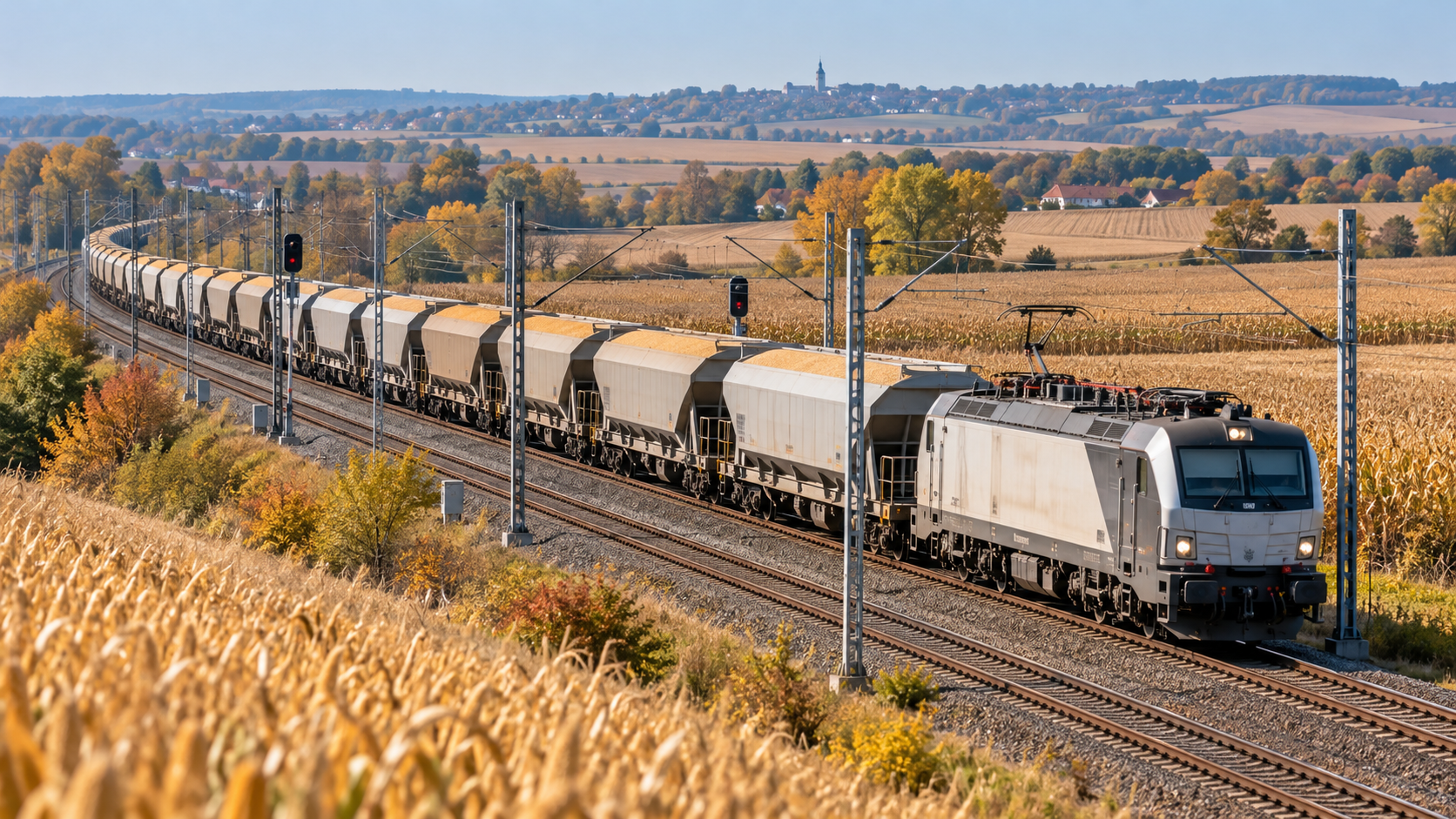
The Ukrainian president specifically discussed transporting maize towards Western European markets in sealed railway wagons, Magyar told Hungarian broadcaster RTL.
Hungary’s prime minister indicated that he would not oppose such shipments provided they passed through Hungary without entering its domestic market.
However, Poland has not announced a new transit agreement in response to the reported request.
Crucially, Ukrainian grain transit through Poland is already permitted under controlled conditions. The question is whether existing routes can accommodate additional shipments while Poland maintains restrictions designed to protect its domestic agricultural market.
Ukraine seeks alternative export corridors
According to Magyar’s interview with RTL, Zelenskyy appealed to neighbouring countries to support grain transportation arrangements similar to those established during the early stages of Russia’s full-scale invasion in 2022.
The Hungarian leader said the Ukrainian president had discussed the possibility of moving maize towards Western Europe using sealed trains.
Magyar’s account, reported by Reuters on 17 October, comes as repeated attacks on shipping and port infrastructure have severely restricted Ukraine’s ability to export agricultural products through the Black Sea.
Ukraine is a major international supplier of wheat, maize and sunflower products. Disruption to its maritime export routes increases the importance of alternative transport corridors through neighbouring European countries.
For Poland, a significant increase in Ukrainian grain transit could generate additional demand for rail freight, transshipment facilities, logistics businesses and port services.
However, the commercial effect would depend on how much cargo Ukraine sought to move, which routes were used and whether sufficient transport capacity was available.
No new shipment volumes, transport contracts or agreed Polish routes have been confirmed.
Poland already allows controlled grain transit
The distinction between Ukrainian grain entering Poland for domestic sale and grain merely passing through the country is central to the issue.
Poland maintains an indefinite national ban on imports of certain Ukrainian agricultural products, including wheat, maize, rapeseed and sunflower seeds, together with selected processed products.
The restrictions were introduced in September 2023 following concerns about the effect of Ukrainian agricultural imports on Polish farmers and domestic grain prices.
However, they do not constitute a general prohibition on transit.
In a written response to the Polish Association of Cereal Producers, dated 9 September 2026, Poland’s Agriculture Ministry confirmed that Ukrainian products covered by the import restrictions could continue to move through Poland under customs supervision.
The ministry explained that shipments were required to follow designated transit procedures, with their movements monitored by Poland’s National Revenue Administration.
Goods transported by road or rail are subject to customs seals, while electronic monitoring can be used to verify their routes and ensure that consignments reach their declared destinations.
The permitted arrangements include onward transit and movements to designated Polish seaports, subject to the applicable customs requirements.
This system is intended to prevent agricultural products subject to the import ban from being diverted into the Polish domestic market.
Consequently, Zelenskyy’s reported request should not be interpreted as evidence that Poland has closed its borders to all Ukrainian grain shipments.
The practical issue is whether Warsaw would support additional transport capacity or changes to existing arrangements.
Polish ports could become more important
Poland’s northern ports provide potential alternatives for Ukrainian exporters seeking access to overseas markets.
Gdańsk, Gdynia, Szczecin and Świnoujście are important freight-handling centres that could potentially support additional agricultural cargo, subject to available storage, rail connections and export capacity.
The challenge is not simply getting grain across the Polish-Ukrainian border.
Ukraine’s rail network uses a wider track gauge than the standard employed across most of Poland and the European Union. Freight therefore often requires transshipment or specialised arrangements at border facilities.
Additional shipments would also require railway capacity, available grain terminals, suitable storage infrastructure and access to onward transport.
In September, Reuters reported that Ukraine was exploring Baltic Sea ports as alternatives to disrupted Black Sea routes.
The Ukrainian Agriculture Ministry estimated that Baltic ports could potentially handle up to 20 million tonnes of grain, although the additional transport costs could amount to approximately $100 per tonne.
Those estimates concerned a potential export option, not an agreed allocation of capacity through Poland.
The additional costs illustrate why rail and port logistics would be central to any expanded transit arrangement.
Higher transport costs can reduce the competitiveness of Ukrainian agricultural exports, particularly for bulk commodities such as maize and wheat, where freight represents a significant part of the final delivered price.
Polish farmers remain concerned about market disruption
Any proposal to expand Ukrainian grain movements through Poland would need to address concerns raised during earlier agricultural trade disputes.
Polish farmers have repeatedly warned that increased Ukrainian shipments could place pressure on domestic storage, transport infrastructure and grain prices.
Those concerns became particularly prominent in 2023, when large volumes of Ukrainian agricultural products entered neighbouring EU markets following the disruption of Black Sea shipping.
The Polish government’s response was to maintain restrictions on domestic imports while allowing controlled transit.
In its September 2026 letter, the Agriculture Ministry emphasised that existing procedures were designed to protect the Polish market while permitting Ukrainian shipments to reach other destinations.
The issue is therefore both commercial and political.
Polish transport companies and ports could benefit from increased freight movements, while agricultural producers would expect guarantees that shipments intended for export would not be redirected into the domestic market.
Competition for port capacity may also matter if an increase in Ukrainian shipments affects the ability of Polish grain exporters to move their own products.
No new Polish government decision authorising expanded transit has been established following Magyar’s latest remarks.
EU transport routes already carry most Ukrainian grain exports
The European Union’s Solidarity Lanes provide important context for Ukraine’s latest appeal.
Established in May 2022, the initiative supports trade through railways, roads and inland waterways, allowing Ukraine to maintain imports and exports despite disruption to maritime routes.
According to the European Commission’s latest published figures, these alternative routes handled approximately 90% of Ukraine’s exports of grain, oilseeds and related products in August 2026.
Only around 10% moved through Black Sea ports during that month.
The figures demonstrate the scale of the shift away from maritime exports as security conditions deteriorated.
Since the Solidarity Lanes were established, the Commission estimates they have helped move approximately 96 million tonnes of Ukrainian grain, oilseeds and related products.
Poland forms part of this wider European transport network alongside Romania, Moldova, the Baltic region and other countries.
An expanded grain-transit arrangement would therefore build on existing infrastructure rather than create an entirely new export system.
European maize supplies add to the pressure
The Ukrainian request also comes during a difficult agricultural season in parts of Europe.
The European Commission forecast in August that the EU’s maize harvest would fall to approximately 50.1 million tonnes in 2026, close to a two-decade low and around one-fifth below the recent three-year average.
Severe heat and drought have damaged maize production in several European countries, including France and Hungary.
Reduced European production could increase demand for imported maize, although the impact on individual markets will depend on prices, trade arrangements and harvest outcomes.
Ukraine’s ability to move agricultural products efficiently into international markets is consequently relevant not only to its exporters but also to European food processors, livestock producers and commodity traders.
However, a lower EU maize harvest does not automatically mean additional Ukrainian grain will enter Poland’s domestic market, particularly while national import restrictions remain in force.
Poland’s response will determine the next steps
Magyar’s remarks establish that Ukraine is seeking assistance from several neighbouring governments, but they do not confirm that those governments have agreed to new transport arrangements.
Hungary’s prime minister has expressed conditional support for transit through his country.
Poland’s position on the latest reported request has not yet been independently confirmed.
The next significant development would be an official Polish response clarifying whether Warsaw intends to facilitate additional shipments, retain the current arrangements unchanged or seek further safeguards.
For railway operators, logistics companies and grain exporters, the most important details will be the volumes, designated routes, customs procedures, transport costs and available port capacity.
Until those arrangements are established, Ukraine’s appeal remains a reported diplomatic request rather than a new Polish-Ukrainian grain-transit agreement.