
Polish businesses and individual entrepreneurs claimed PLN 13.09 billion (approximately $3.37 billion or €3 billion) in research-and-development tax deductions for 2025, according to newly reported Finance Ministry figures, as Parliament considers changes that could reshape the country’s innovation incentives from next year.
A total of 3,817 taxpayers used Poland’s research-and-development (R&D) relief, the highest number recorded since the incentive was introduced in 2016.
The figure represents an increase of approximately 7.8% from the 3,541 taxpayers who used the relief for 2024.
The latest statistics, highlighted in a Grant Thornton analysis and reported by Polish media on 21 October, also show growing use of the preferential IP Box tax regime and continuing interest in incentives for industrial robotics, business expansion and prototype development.
However, the government is proposing to abolish the expansion relief from 2027 while extending the robotics incentive for another ten years.
Those changes are contained in a draft amendment to Poland’s personal and corporate income-tax legislation, currently being considered by Parliament.
No amendment has yet been enacted, and the proposed January 2027 changes remain subject to the legislative process.
R&D deductions reach PLN 13.09bn
The latest figures were presented in reporting based on Finance Ministry statistics obtained and analysed by professional services firm Grant Thornton.
According to Business Insider Polska’s analysis of the latest data, 3,817 taxpayers claimed R&D deductions totalling PLN 13.09 billion in their returns for the 2025 tax year.
Poland’s R&D relief allows qualifying businesses to make additional deductions for eligible expenditure on research and development.
Depending on the taxpayer and the category of expenditure, eligible costs can include employee remuneration attributable to R&D activity, materials, specialist equipment and certain research services.
The purpose is to reduce the income-tax cost of undertaking eligible innovative activities.
Crucially, the PLN 13.09 billion is the amount deducted from taxable income, not the amount of tax refunded to companies or an equivalent payment from the government.
The actual tax benefit depends on the applicable tax rate, the taxpayer’s taxable income and the rules governing the deduction.
The newly reported figures indicate that more businesses are using the incentive, but they do not establish that the full deduction amount represents additional investment that would otherwise not have taken place.
More taxpayers claim relief, but revisions complicate comparisons
The increase in the number of R&D-relief users is clearer than the comparison of deduction totals.
Grant Thornton’s September 2025 edition of its Ulgi na innowacje report recorded 3,541 taxpayers claiming approximately PLN 10.96 billion in deductions for 2024.
However, more recent figures cited in the company’s latest analysis show that amended tax returns subsequently increased the amount attributed to 2024 to almost PLN 13.5 billion.
This matters when comparing the two years.
Comparing the initially reported PLN 10.96 billion for 2024 directly with the PLN 13.09 billion reported for 2025 would suggest a substantial increase in deductions.
But the revised 2024 total is higher than the newly reported 2025 amount.
The figures therefore need to be compared on a consistent basis, taking account of amended returns and the dates on which the tax data were collected.
Taxpayers can correct earlier income-tax returns where they discover qualifying expenditure that was not originally deducted, subject to the applicable legal conditions and time limits.
Such corrections can increase the value of relief attributed to a historical tax year long after its original reporting period.
In contrast, the increase from 3,541 to 3,817 R&D-relief users demonstrates higher reported participation in the annual datasets, although those counts may also be revised.
How Polish businesses used innovation tax incentives in 2025
The newly reported Finance Ministry data cover five principal innovation-related tax incentives.
| Tax incentive | Taxpayers in 2025 | Reported deductions |
|---|---|---|
| Research and development (R&D) | 3,817 | PLN 13.09bn |
| IP Box | 8,167 | Not applicable — reduced tax rate |
| Robotics | 442 | PLN 201m |
| Expansion | 574 | PLN 180m |
| Prototype development | 115 | PLN 37m |
The figures cover taxpayers subject to personal income tax (PIT) and corporate income tax (CIT).
Across the five incentives, there were 13,115 reported instances of taxpayers using an individual relief or preference.
That is not equivalent to 13,115 separate businesses because an eligible taxpayer may use more than one incentive.
The figures also combine different forms of tax support.
Most of the incentives involve deductions from taxable income, while IP Box provides a preferential tax rate on qualifying income.
Accordingly, IP Box should not be assigned a fictional deduction total or included in the aggregate amount of qualifying costs deducted.
Excluding IP Box, the four deduction-based incentives accounted for approximately PLN 13.51 billion in reported deductions for 2025.
The figures demonstrate the scale of tax reliefs used in connection with research, technology and business development, although they do not establish the government’s total revenue foregone.
R&D labour costs account for most deductions
Employee remuneration remains a particularly important component of R&D claims.
The latest reporting, citing Grant Thornton’s analysis, indicates that employee-related expenditure represented approximately 85% of the R&D deduction total for 2025.
That reflects the importance of specialist personnel in activities such as software development, engineering, product design and scientific research.
The Finance Ministry’s R&D guidance explains that qualifying activity must involve systematic creative work intended to increase knowledge or develop new applications of existing knowledge.
Ordinary business expenses do not automatically qualify merely because a company uses modern technology or improves its commercial processes.
Businesses must establish that the activity satisfies the statutory definition and that the relevant expenditure meets the deduction rules.
Appropriate records are also important, particularly where employees spend only part of their working time on qualifying research and development.
The latest reporting identifies industrial businesses, financial companies and the information-technology sector among the significant users of the R&D incentive.
However, the figures do not establish that every technology-related project or software development activity qualifies for relief.
IP Box remains the most widely used preference
The largest reported taxpayer count among the five incentives concerns IP Box.
A total of 8,167 taxpayers used the preference for 2025, compared with 7,650 in the previous year’s dataset.
That represents an increase of approximately 6.8%.
Introduced in 2019, IP Box allows qualifying income from certain intellectual-property rights to be taxed at a preferential rate of 5%.
Eligible rights can include patents and copyright in computer software, provided the relevant statutory conditions are satisfied.
The Finance Ministry’s official IP Box guidance explains that the preference applies to qualifying intellectual-property income connected with research-and-development activity.
The rules also require taxpayers to determine the qualifying income and apply the relevant calculation mechanism, including the so-called nexus ratio linking income to eligible R&D expenditure.
For technology companies and software developers, this can provide a significant tax-planning consideration when commercialising intellectual property.
Grant Thornton’s latest analysis identifies the IT sector as an important user of IP Box, although the preference is not confined to software businesses.
Unlike the R&D relief, IP Box does not primarily operate by deducting an additional amount of expenditure.
It applies a lower tax rate to qualifying income, which is why the latest reported table provides a taxpayer count but no comparable deduction total.
Robotics incentive attracts more taxpayers
The data also show an increase in businesses using Poland’s robotics tax relief.
A total of 442 taxpayers claimed PLN 201 million in deductions for 2025.
In 2024, the incentive was used by 427 taxpayers, who deducted approximately PLN 212.3 million.
The number of users therefore increased slightly, while the total reported deduction amount declined.
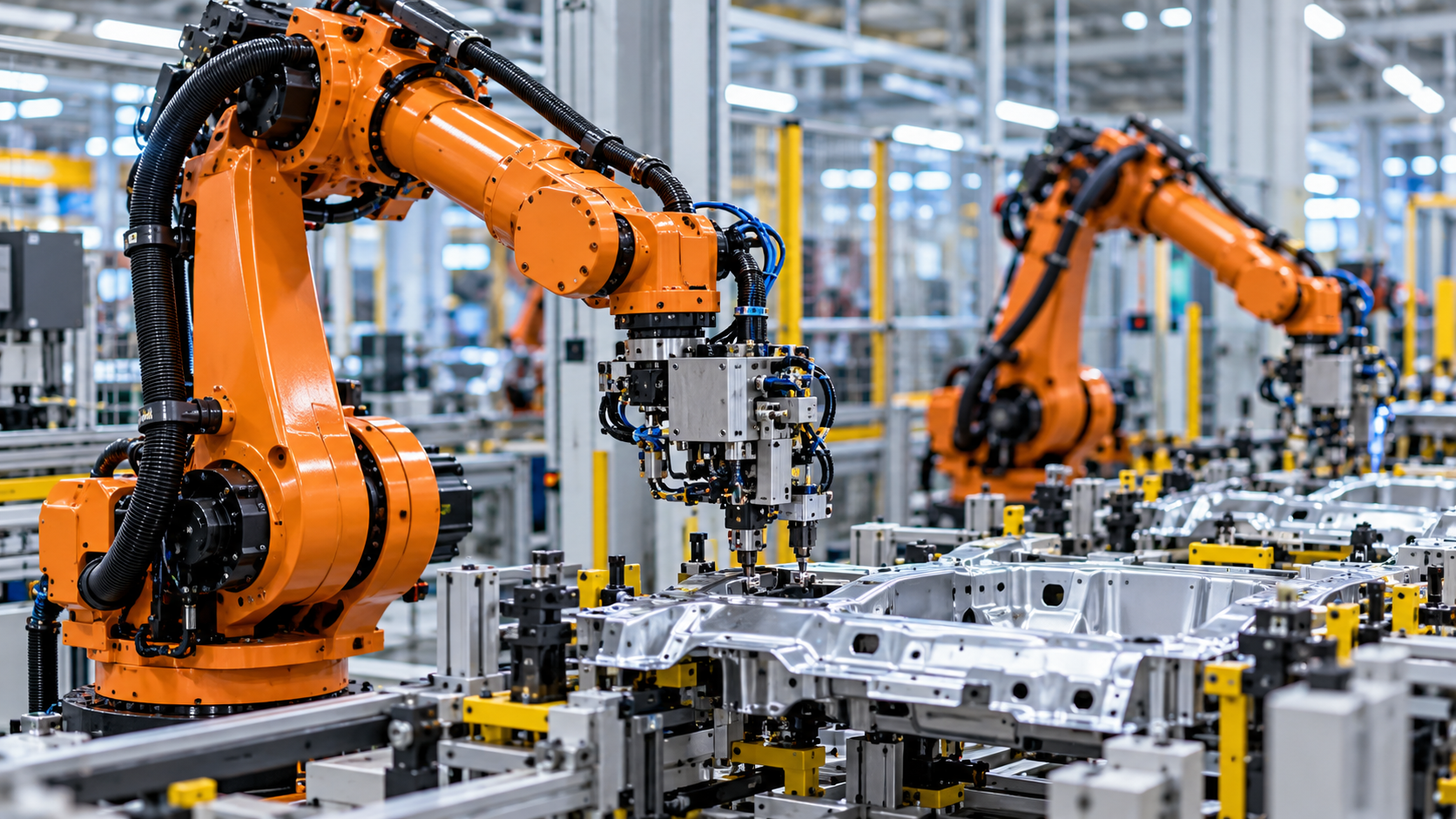
The robotics relief supports qualifying expenditure associated with industrial automation.
Under the current Finance Ministry guidance, eligible taxpayers can deduct an additional 50% of specified robotics costs from their taxable income, subject to statutory restrictions.
The costs may include qualifying industrial robots and related equipment used in production processes.
The incentive currently applies to the period ending with the tax year beginning in 2026.
The government is proposing to extend its availability by another ten years, potentially through 2036.
For manufacturing businesses considering automation investments, an extension could provide a longer planning horizon.
However, the precise eligibility rules, the timing of qualifying expenditure and the treatment of depreciation remain important.
The proposal should not be treated as guaranteeing relief for every automation project or robotics purchase.
Expansion relief faces abolition from 2027
While robotics support could be extended, the government is proposing to abolish Poland’s tax relief for business expansion.
The latest figures show that 574 taxpayers used this incentive in 2025, deducting approximately PLN 180 million.
That compares with 588 taxpayers in 2024, when deductions exceeded PLN 170 million.
The relief is intended to support qualifying costs connected with increasing sales of products, including expenditure associated with entering markets and promoting eligible products.
It can be relevant to manufacturing businesses seeking to expand commercial activity in Poland or abroad.
However, the government argues that the incentive has not demonstrated sufficient effectiveness to justify its continued operation.
During the Sejm’s first reading of the proposed changes on 6 October, Deputy Finance Minister Jarosław Neneman explained the government’s intention to remove the expansion relief while extending robotics support.
That is the government’s policy justification, rather than an independently established finding that the expansion relief provides no commercial benefit.
The proposal is included in parliamentary print 3149.
If enacted in its proposed form, the change would affect future eligibility for the incentive from 2027, subject to the final wording and any transitional provisions.
Companies with qualifying expansion expenditure should therefore distinguish the existing law from the changes currently under parliamentary consideration.
Prototype relief remains comparatively small
The least-used of the five incentives was the prototype relief.
According to the newly reported data, 115 taxpayers used the preference for 2025, claiming approximately PLN 37 million in deductions.
The previous Grant Thornton edition recorded 124 users and approximately PLN 20 million in deductions for 2024.
The latest figures therefore suggest fewer users but a greater aggregate deduction amount.
The prototype relief is designed to assist qualifying costs of trial production and bringing certain newly developed products to market.
It can be relevant where businesses move from research and development towards commercial manufacturing.
The available figures do not identify which individual companies generated the higher deduction amount in 2025.
Nor do they establish whether the increase resulted from larger individual projects, different industrial activity or amendments to returns.
The new legislative proposal does not establish an equivalent general abolition of the prototype relief.
Parliament considers the proposed 2027 changes
The government’s proposed amendments are contained in Sejm print 3149, submitted to Parliament on 29 September 2026.
The bill proposes extending the robotics relief for a further ten years and abolishing the expansion relief, alongside changes to other personal income-tax deductions.
The first reading took place on 6 October, after which the legislation proceeded through the Finance Committee.
A committee report was recorded on 20 October as parliamentary print 3227, and the Sejm approved a procedural motion concerning its consideration on 21 October.
The bill has not yet completed the legislative process.
The final provisions will depend on subsequent parliamentary decisions, any Senate amendments, presidential consideration and publication in the Journal of Laws.
For companies, the immediate distinction is therefore between the incentives currently available under enacted tax legislation and those that may change from 1 January 2027.
Tax planning remains dependent on eligibility and final legislation
The latest figures show substantial use of tax incentives in Poland’s innovation economy.
R&D participation reached a new reported high in 2025, while IP Box continued to attract thousands of taxpayers.
Robotics and prototype reliefs remained much smaller in scale, and the proposed abolition of expansion relief introduces uncertainty for businesses planning qualifying market-development expenditure.
For companies operating across Poland and other European markets, these incentives can influence the after-tax costs of research, automation and intellectual-property commercialisation.
However, a published deduction amount is not the same as a realised cash saving, and tax eligibility cannot be assumed solely from the nature of a company’s business.
The next important developments will be the final parliamentary wording of the PIT and CIT amendments and any further updates to the Finance Ministry’s innovation-relief statistics.
Until the legislative process is complete, the proposed extension of robotics support and abolition of expansion relief remain plans rather than changes to enacted law.