A North Sea carbon-storage project involving Polish energy group Orlen has been selected for €223 million (approximately PLN 974 million or $250 million) in European Union funding, supporting plans to build infrastructure capable of permanently storing millions of tonnes of industrial carbon dioxide beneath the Norwegian seabed.
The Atlas project is being developed by Orlen Upstream Norway, Norwegian energy company Aker BP and maritime infrastructure specialist Höegh Evi.
According to an announcement published by Orlen on 21 October, the infrastructure is designed to transport and store six million tonnes of carbon dioxide annually, with the potential to expand capacity to at least ten million tonnes if commercial demand develops.
The partners intend to make a final investment decision in 2028 and begin injecting captured CO₂ into underground geological formations in 2031.
Atlas was among 77 projects selected for support under the European Commission’s latest €3.4 billion Innovation Fund funding round, announced on 19 October.
However, the EU grant agreement has not yet been finalised, the project’s overall investment cost has not been disclosed, and construction and commercial operations remain future stages.
Polish company holds 20% of North Sea storage licence
Orlen’s participation comes through its Norwegian subsidiary, Orlen Upstream Norway, which holds a 20% interest in the EXL011 offshore carbon-storage exploration licence.
Aker BP holds the remaining 80% and operates the licence.
The ownership structure is confirmed independently by the Norwegian Offshore Directorate’s licensing records.
Höegh Evi is responsible for developing the maritime transportation component, including the logistics needed to move captured carbon dioxide from European industrial regions to the Norwegian storage site.
The distinction between these responsibilities is important.
Orlen’s 20% share concerns the offshore storage licence. It does not establish that the Polish company owns 20% of every part of the Atlas transport-and-storage network or is entitled to 20% of the announced EU funding.
Indeed, Höegh Evi’s announcement of the funding decision identifies Aker BP and Höegh Evi as recipients of the €223 million award.
The companies have not disclosed how the support will be distributed among the project participants or the financial commitments expected from Orlen.
The current Norwegian licence is an exploration licence supporting evaluation of the proposed storage development. It should not be confused with confirmation that the complete facility has received every permit needed for commercial CO₂ injection.
How the Atlas carbon-storage system would work
Atlas is designed to provide a transport and permanent-storage service for industrial companies seeking to reduce the carbon dioxide released from their production processes.
Carbon capture and storage, commonly abbreviated to CCS, involves capturing CO₂ from an industrial source, transporting it to an appropriate location and injecting it into geological formations intended to retain it permanently.
The proposed Atlas system would connect industrial customers across Europe with offshore storage infrastructure on the Norwegian Continental Shelf.
Captured carbon dioxide would be collected at regional export hubs near industrial clusters, prepared for shipping and transported as a liquid aboard specialised vessels.
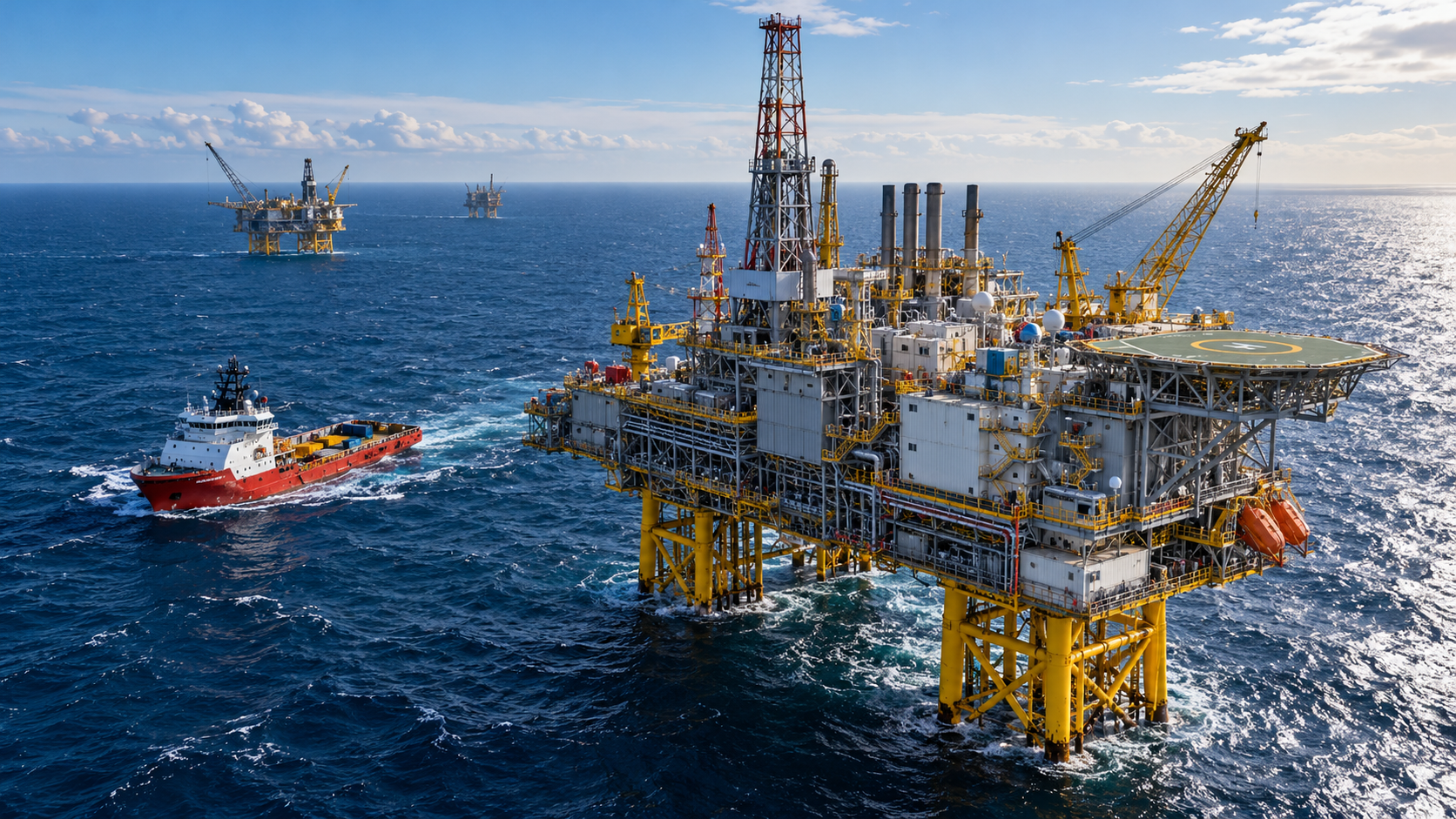
At the offshore storage location, the CO₂ would be injected into deep geological formations approximately 2,000 metres beneath the seabed.
According to the project partners, the storage formation is a saline aquifer — a porous geological structure containing salty water and considered potentially suitable for long-term CO₂ storage.
The project would need to demonstrate appropriate geological containment, injection performance and monitoring arrangements as part of its development and regulatory processes.
A distinctive feature of the proposed design is the intention to inject carbon dioxide directly from the transport vessels through subsea infrastructure.
According to Orlen, this would avoid the need to construct and operate conventional offshore platforms specifically for receiving and injecting the CO₂.
The partners believe that approach could reduce capital and operating expenditure.
Those potential savings remain project assumptions rather than independently demonstrated commercial results.
Storage capacity could eventually exceed ten million tonnes
Atlas is initially designed to accommodate six million tonnes of carbon dioxide annually.
The partners say the geological characteristics of the EXL011 licence area could allow that figure to rise to at least ten million tonnes a year if demand justifies further investment.
The project information published by Aker BP describes Atlas as a scalable network intended to connect multiple industrial regions with offshore storage.
The developers plan to use modular infrastructure to allow the system to expand as the market develops.
This flexibility could become commercially relevant if more European manufacturers invest in capturing emissions but cannot develop suitable storage facilities near their own operations.
Potential customers include energy-intensive industries such as cement, chemicals and other industrial activities where avoiding certain process emissions can be technically challenging.
However, the six-million-tonne figure is a design-capacity target, not the quantity already being stored.
Likewise, the potential expansion beyond ten million tonnes depends on further technical development, infrastructure investment and sufficient demand from customers.
No confirmed portfolio of industrial customers or contracted annual storage volumes was disclosed in the latest announcements.
€223m support forms part of wider EU investment programme
The Atlas funding selection forms part of the European Commission’s 19 October Innovation Fund announcement, covering 77 projects across 23 European Economic Area countries.
The selected projects are intended to receive approximately €3.4 billion in support for technologies capable of reducing industrial greenhouse-gas emissions.
The programme covers sectors including industrial carbon management, clean-technology manufacturing, renewable energy, energy storage, alternative fuels and other decarbonisation technologies.
The Innovation Fund is financed through revenues from the EU Emissions Trading System, which requires covered industries to account for their greenhouse-gas emissions through tradable allowances.
The fund is intended to help commercialise innovative technologies that face substantial investment costs or technical risks.
The latest funding round attracted 358 applications seeking a combined €17.5 billion.
The selection of Atlas therefore places the project among a comparatively small group chosen for funding support from a heavily oversubscribed programme.
However, selection is not equivalent to cash having been transferred to the project.
The European Commission has invited successful applicants to begin grant-agreement preparations with the European Climate, Infrastructure and Environment Executive Agency, known as CINEA.
During that process, the parties will finalise the funding contracts, including budgets, project timetables, technical obligations and other contractual requirements.
The Commission expects the results of grant preparation to be announced in the first quarter of 2027.
The €223 million should consequently be treated as the funding selected for the joint Atlas development, rather than an amount already disbursed to Orlen or its partners.
Project already recognised as European infrastructure priority
Atlas had previously received recognition under the EU’s framework for cross-border energy infrastructure.
In April 2026, the project was included on the European Commission’s list as a Project of Mutual Interest, designated PMI 13.17.
The designation recognises the cross-border relevance of infrastructure connecting European energy or industrial systems with participating non-EU countries.
In Atlas’s case, the proposed infrastructure would connect European industrial CO₂ sources with permanent storage in Norway.
The classification can support project development and eligibility to seek funding from certain European infrastructure programmes, subject to their rules.
It does not automatically mean that construction has been authorised or that the project has secured all required financing.
The separate Innovation Fund selection represents a further step in developing the proposed infrastructure.
Orlen seeks a wider role in carbon-management services
For Orlen, Atlas represents an opportunity to develop commercial activities beyond the production and sale of conventional energy.
The Polish group has substantial experience in offshore oil and gas operations through its Norwegian business.
Carbon-storage projects can draw on some of the geological, drilling and offshore-engineering expertise developed in traditional upstream energy activities.
Orlen also has industrial facilities of its own that may require emissions-reduction solutions.
The company’s strategy to 2035 includes an objective to establish capabilities to capture, transport and store approximately four million tonnes of CO₂ annually.
That group-level strategic target is distinct from Atlas’s six-million-tonne initial design capacity and should not be treated as an additional, directly comparable amount.
Wiesław Prugar, Orlen’s Vice-President responsible for upstream operations, described underground carbon storage as a potential solution for industries where reducing emissions is technically difficult.
In the company’s announcement, he argued that cooperation with Aker BP and Höegh Evi could allow Orlen to apply experience from its upstream business to emerging industrial carbon-management services.
The possible commercial opportunity is broader than storage for Orlen’s own operations.
A functioning cross-border CCS network could eventually offer transport and storage services to third-party industrial companies.
The revenue model would depend on commercial arrangements with customers, infrastructure utilisation, operating costs and the price industrial emitters are prepared to pay for transport and storage.
The partners have not disclosed a final pricing structure, expected annual revenue or projected financial return.
Final investment decision targeted for 2028
Although the funding selection represents a significant development, Atlas remains at a pre-investment-decision stage.
Aker BP and Orlen are targeting a final investment decision in 2028.
Such a decision would determine whether to proceed with the planned development on the basis of its technical design, commercial arrangements, financing and other required conditions.
If the project advances according to the current timetable, its first CO₂ injection is planned for 2031.
Before then, the partners must complete further development work, finalise financing arrangements and progress the necessary infrastructure and regulatory requirements.
The availability of industrial customers willing to use the system will also be commercially important.
Carbon capture and storage can prevent captured CO₂ from being released into the atmosphere when the process operates as intended, but it does not eliminate all emissions associated with industrial production.
The effectiveness of a particular project depends on how much CO₂ is captured, emissions associated with transportation and processing, and the integrity of long-term storage.
For now, Atlas has secured an important funding selection and has a defined development timetable, but it has not yet reached construction or commercial operation.
For Orlen, the project’s progress will help determine whether its Norwegian offshore capabilities can become part of a larger European business in transporting and storing industrial carbon dioxide.